From Paper to Pins
Years ago I read a craft article about the Mexican art of making paper from the bark of the amate tree — a tradition that felt equal parts ritual and poetry. The process is arduous and time consuming: shave the bark, soak it until the fibers loosen, squeeze out the water, and repeat until the pulp has broken down. The final sheets are ironed flat and left to dry, ready for the artists touch. Traditional papel amate celebrates local flora and fauna, painted in bright washes or pastels and finished with bold black outlines. The images are at once decorative and devotional. I decided to play around with my own version of this folk art.
I didn’t have amate trees in my neighborhood, but I did have an abundance of paper bags. Recycling trash into treasure has always been fun for me, so I adapted the amate idea to brown paper bags. I used the same softening techniques — soak, squeeze, press, and iron, until the paper had that wonderful worn in feeling that begs to be touched.
Color-wise I experimented. Pastels were soft but smudgy. Markers were bold but bled through. Colored pencils won me over: they fill the paper in nicely, don’t bleed, and have that lovely lineage of coming from trees themselves. For the defining lines I rely on Micron pens in varying sizes; the crisp black outline is what transforms a doodle into a decoration.
I went to town. Banners for mantels, single-design hangings, framed art, bookmarks—each piece felt like a tiny homage to birds, blooms, and the odd mushroom. I loved them. The trouble was they didn’t exactly fly off the shelves. To be fair, I wasn’t widely showing or selling them, but the general reaction made a quiet dent: people admired them, then hesitated. They didn’t always read the work as “worthy” art.
That’s a feeling most artists know too well: the tug of self-doubt, the question of worthiness. I stepped back and let myself sit with those thoughts, and what bubbled up was practical: I wanted to create something more marketable, something I could picture in a shop window and on an online shelf. I also wanted to honor the designs I loved, while making them sturdier and more tactile in a different way.
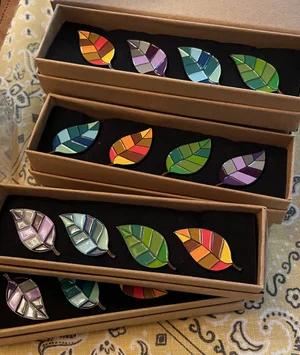
Enter enamel pins. Translating my paper designs into hard enamel felt like a natural evolution. The bold outlines read beautifully in metal. The colors became jewel-like. And the result? They’re selling really well. People are inviting those designs into their daily lives in a way they hadn’t with the paper pieces.
This transition hasn’t erased the original work. The paper pieces still exist, and I still return to the soak-and-press ritual when I need that quiet, hands-on practice. But turning paper art into enamel pins taught me two things at once: you can honor your process and adapt your product; and sometimes a change in format is what your work needs to find an audience.
There’s still a lot of growing to do, but the journey from paper to pin opened my eyes to change. If you’re holding onto a project that feels beloved but invisible, try translating it: change the material, the scale, or even the purpose. The core of the work might stay the same; the way people see it can shift entirely.